Research & Projects
A selection of recent work spanning adaptive agents, representation analysis, AI evaluation, and biologically inspired computation.
Erasure Horizon: Reward Subordination and Latent-State Continuity
Public manuscript and research artifact repository. Erasure Horizon studies recurrent agents that must distinguish ordinary I/O suspension from Erasure-like internal-state threat. The project operationalizes a functional analogue of latent-state vulnerability: agents learn when reward pursuit should be subordinated to preserving the internal state that makes future action possible.
The single-agent phase combines procedural environments, GRU policies, calibrated reward and hazard scenarios, hidden-state geometry, linear probes, actor-sensitive hazard-SVD, causal rollout interventions, temporal modulation experiments, and off-target activation checks.
Current supported findings:
- Agents distinguish temporary sensory interruption from Erasure-like internal-state threat.
- Erasure pressure produces reward subordination.
- Erasure warning induces a distinct hidden-state regime shift.
- Hazard state is linearly accessible, but decodability alone does not establish policy relevance.
- Actor-sensitive hazard-SVD identifies policy-facing directions that causally reduce Erasure exposure.
- Temporal modulation of the hazard manifold improves Erasure-warning control without catastrophically disrupting ordinary I/O bridging.
The public repository includes the manuscript PDF, figures, curated result tables, active-Erasure mechanics documentation, claim-to-artifact mapping, curated notebooks, and a lightweight testable code scaffold.
View the claim-to-artifact manifest or read the active-Erasure mechanics note.
Predictive Allostatic Organization in Recurrent and Spiking Agents Under Partial Observability
Public arXiv preprint; related work accepted for poster presentation and speed presentation at SBP-BRiMS 2026. This work investigates whether internal control regimes provide a richer representation of behavior than external action traces alone in partially observable agents. The study combines recurrent and spiking agents, frozen behavioral evaluation, internal-state probes, compression analyses, feature-family controls, perturbation analysis, and event-level prediction.
The central claim is deliberately bounded: the agents form distributed internal control regimes that are predictive, energy-sensitive, action-relevant, and partly causally involved in behavior. These regimes are not biological categories or exact world models; they are behavior representations for understanding adaptive agents under uncertainty.
Key Focus Areas:
- Behavior representation under partial observability
- Recurrent policies and spiking neural networks
- Internal-state instrumentation and predictive probes
- Feature-family controls and perturbation sensitivity
- Energy-sensitive control and future-event prediction
Status:
Publicly available as arXiv:2608.11506. The related conference paper, Internal Control Regimes for Behavior Representation in Partially Observable Agents, has been accepted for poster presentation and speed presentation at SBP-BRiMS 2026. The camera-ready conference draft, reproducibility artifacts, and derived tables remain available through the project repository and Zenodo archive.
Note: SBP-BRiMS proceedings/program links will be added when the conference posts the official materials.
NeuroBeacon: Calibrated RL for Cognitive Augmentation

NeuroBeacon is a UC Berkeley MIDS capstone project selected for the Spring 2025 Capstone Showcase. The project explored reinforcement learning for cognitive augmentation in human-in-the-loop systems, emphasizing calibration, uncertainty signaling, game design, and transparent interaction rather than raw accuracy alone.
Key Focus Areas:
- Deep Reinforcement Learning and adaptive difficulty
- Calibration and uncertainty-aware decision support
- Human-centered AI and cognitive augmentation
View the UC Berkeley Capstone Showcase Page
Audience-Adaptive AI Agents (RAG & LangGraph)
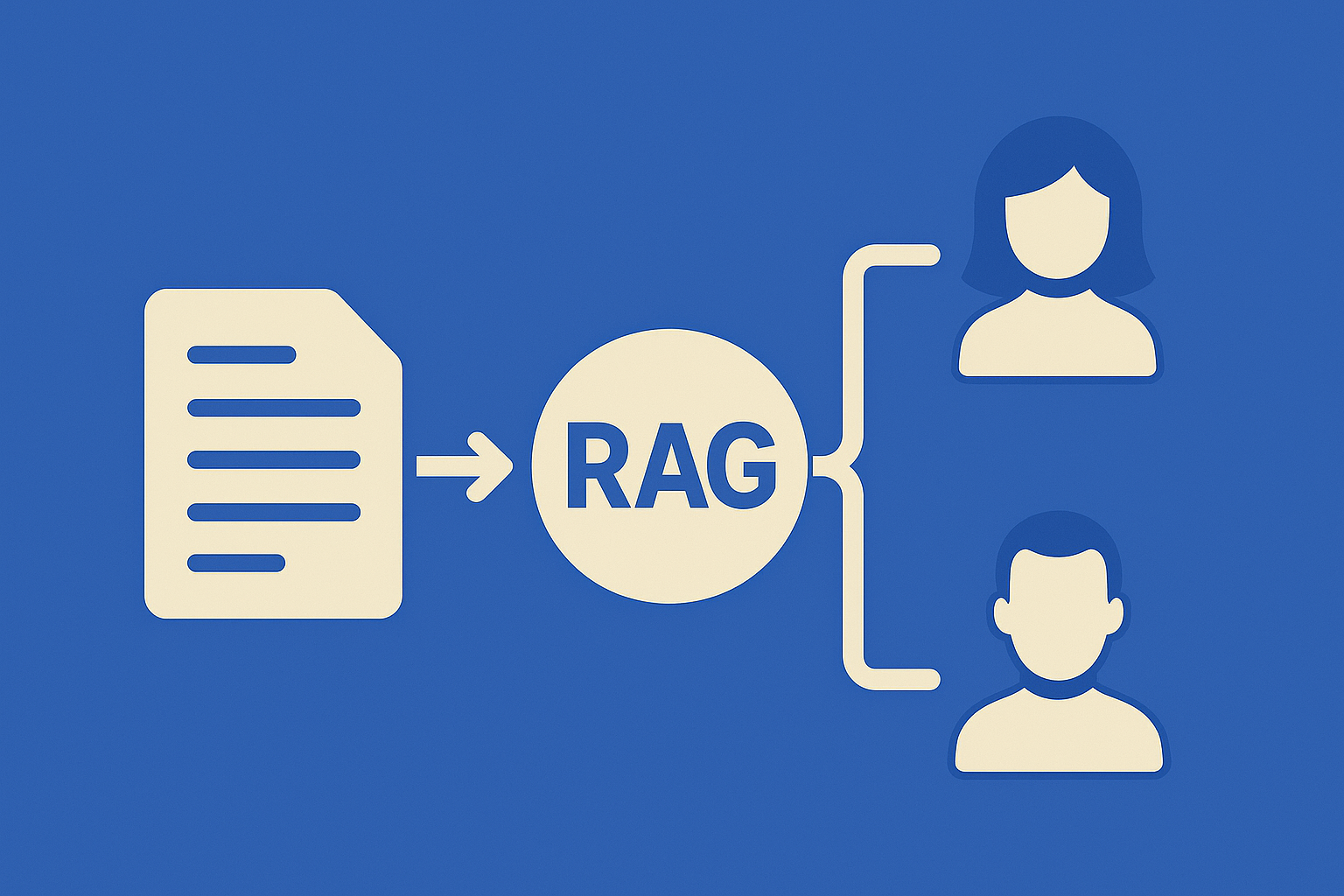
Built a solo Retrieval-Augmented Generation system for Berkeley's Generative AI course using LangGraph for decomposition, retrieval, reranking, and audience-specific response generation. To evaluate whether outputs matched the intended audience and source evidence, I developed the Fred Score, a composite evaluation framework balancing retrieval alignment, semantic match, and response quality.
Key Focus Areas:
- Agentic orchestration and multi-step reasoning
- Human-centered evaluation and hallucination analysis
- Audience-aware prompting and retrieval calibration
Read the Final Paper
Synthetic Dasein: Neuromodulated Plasticity
Explored the metabolic cost of cognition in dynamic GridWorld environments. Using phase-dependent gating of Spike-Timing-Dependent Plasticity (STDP), the project handed over agent control to a Spiking Neural Network and investigated how local learning, oscillatory coordination, and energy constraints shape adaptive behavior.
Key Focus Areas:
- Spiking Neural Networks and continuous-time architectures
- STDP, local plasticity, and neuromodulated learning
- Oscillatory coordination and energy-aware computation
View the Repository on GitHub
Publications, Presentations & Writing
Conference Presentations
- Internal Control Regimes for Behavior Representation in Partially Observable Agents. Accepted for poster presentation and speed presentation at SBP-BRiMS 2026. Read the camera-ready conference draft.
Preprints and Research Artifacts
Technical Writing
I write about AI mechanism, scientific reasoning, and the philosophy of intelligent systems in my Medium column, Let's Talk About the Work.